Common Vitamin Deficiencies in Pakistan and How to Fix The
- 11 Sep 2025
- 0 Comments
- Vitamins, nutrition, health in Pakistan

Common Vitamin Deficiencies in Pakistan and How to Fix Them
Introduction
Good nutrition is the foundation of a healthy life. Sadly, in Pakistan, millions of people suffer from vitamin deficiencies due to poor diet, lack of awareness, and limited access to nutritious foods. These deficiencies can lead to serious health issues such as weak immunity, bone problems, fatigue, and poor growth in children. This blog will highlight the most common vitamin deficiencies in Pakistan, their symptoms, and practical ways to fix them.
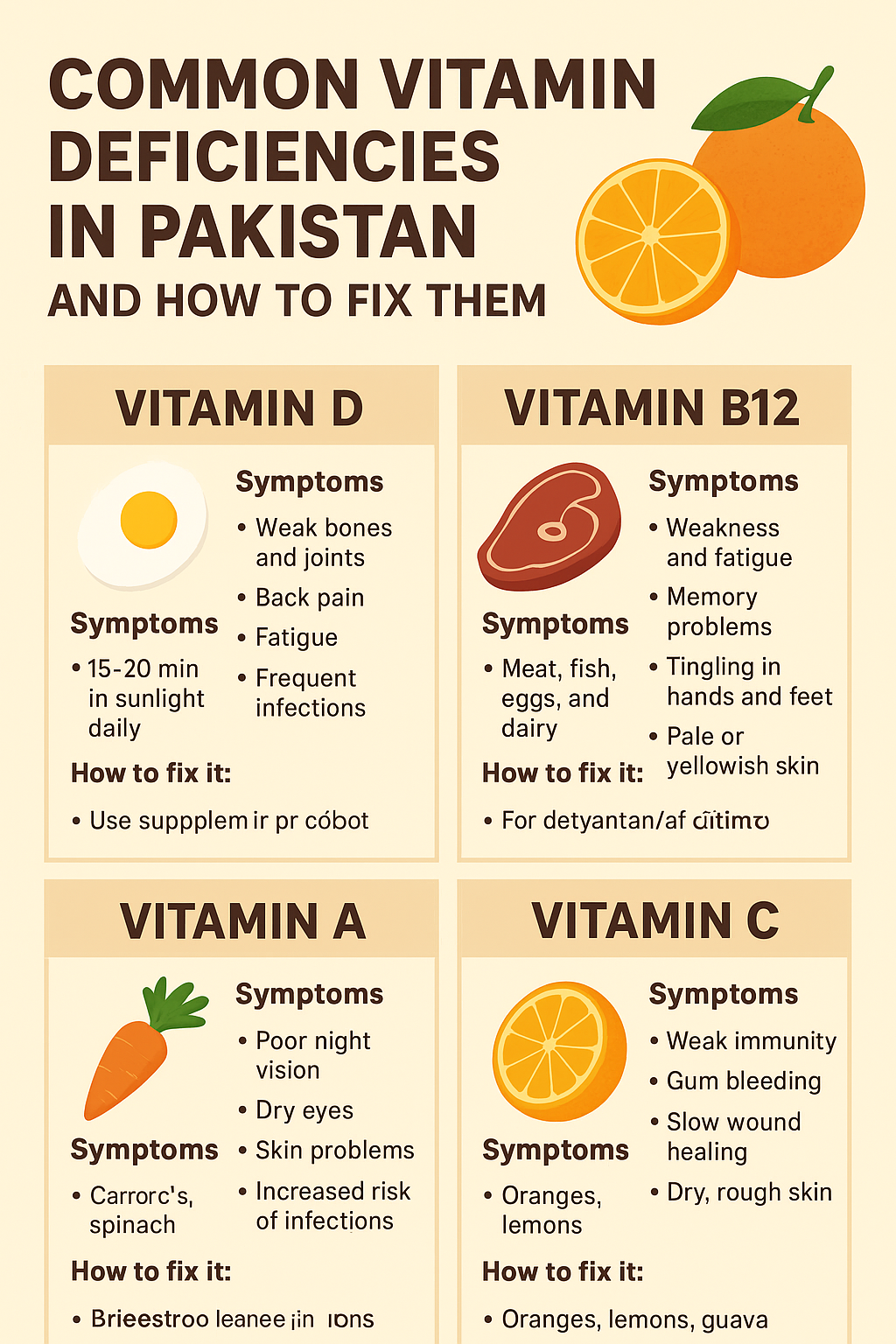
1. Vitamin D Deficiency
Why it’s common:
Despite plenty of sunlight, many people in Pakistan avoid sun exposure due to hot weather, indoor lifestyles, or cultural clothing.
Symptoms:
-
Weak bones and joints
-
Back pain
-
Fatigue and low energy
-
Frequent infections
How to fix it:
-
Spend 15 - 20 minutes in sunlight daily.
-
Eat vitamin D-rich foods: fish, eggs, milk, and fortified cereals.
-
Use supplements if prescribed by a doctor.
2. Vitamin B12 Deficiency
Why it’s common:
Many people consume low amounts of animal-based foods, which are the main source of B12.
Symptoms:
-
Weakness and fatigue
-
Memory problems
-
Tingling in hands and feet
-
Pale or yellowish skin
How to fix it:
-
Eat more animal products: meat, fish, eggs, and dairy.
-
Vegetarians can take fortified cereals and B12 supplements.
3. Vitamin A Deficiency
Why it’s common:
Poor intake of fruits and vegetables, especially among children in rural areas.
Symptoms:
-
Poor night vision
-
Dry eyes
-
Skin problems
-
Increased risk of infections
How to fix it:
-
Include foods rich in vitamin A: carrots, sweet potatoes, spinach, and mangoes.
-
Breastfeeding is important for infants to prevent early deficiency.
-
Vitamin A supplements may be given to children at risk.
4. Iron Deficiency (Anemia)
(Not a vitamin, but very common in Pakistan)
Why it’s common:
Low intake of iron-rich foods and high consumption of tea (which blocks iron absorption).
Symptoms:
-
Fatigue and weakness
-
Dizziness
-
Pale skin
-
Shortness of breath
How to fix it:
-
Eat iron-rich foods: red meat, lentils, spinach, beans.
-
Combine iron foods with Vitamin C (oranges, lemons) to boost absorption.
-
Reduce tea/coffee with meals.
5. Vitamin C Deficiency
Why it’s common:
Limited intake of fresh fruits and vegetables.
Symptoms:
-
Weak immunity
-
Gum bleeding
-
Slow wound healing
-
Dry, rough skin
How to fix it:
-
Eat citrus fruits (oranges, lemons), guava, strawberries, and tomatoes.
-
Avoid overcooking vegetables, as heat destroys vitamin C.
Which Doctors to Consult for Vitamin Deficiencies?
-
General Physicians → First check-up, blood tests, and supplements.
-
Nutritionists / Dietitians → Create healthy diet plans.
-
Endocrinologists → For severe cases linked with hormonal or metabolic problems.
Conclusion
Vitamin deficiencies are a silent health crisis in Pakistan. Lack of awareness, poor diet, and unhealthy eating habits make the problem worse, especially among children and women. The good news is that these deficiencies can be easily fixed with simple lifestyle changes, eat a balanced diet, spend time in sunlight, and take supplements when necessary.